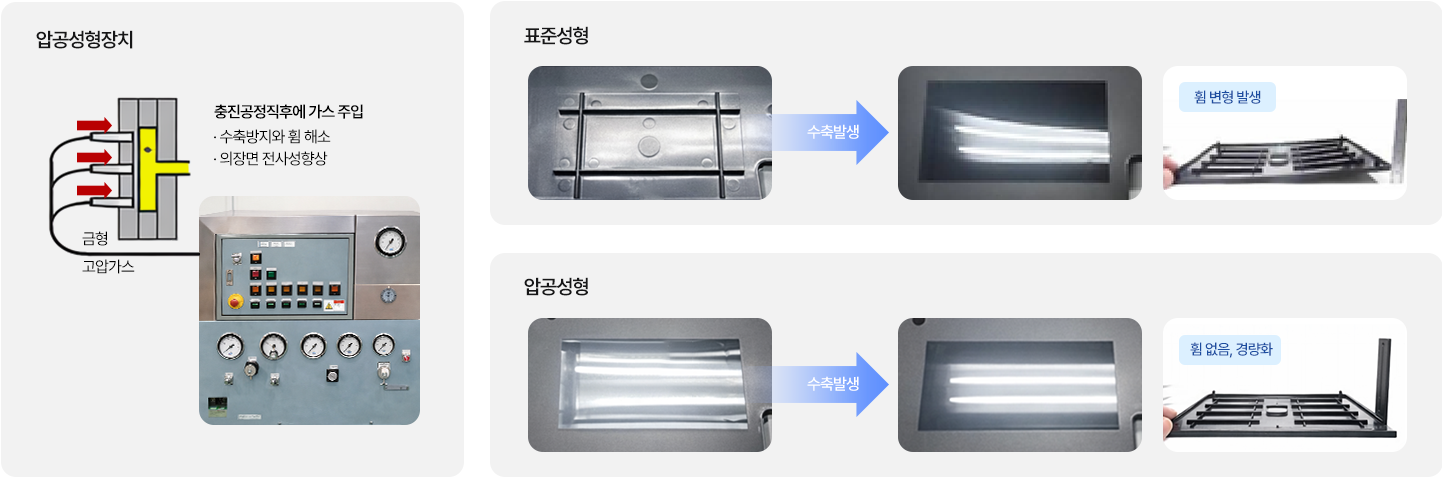
Immediately after cavity filling, nitrogen gas is injected through valves installed in the lower core, replacing the conventional high-pressure holding process with a uniform low-pressure gas retention method. This process effectively eliminates concentrated stress around the gate area, fundamentally preventing warpage, cracking, and post-process deformation. As a result, the dimensional stability and surface quality of automotive engineering plastic components are significantly improved.
By maintaining uniform pressure across the molten resin surface through nitrogen gas back-pressure, cooling efficiency is maximized without prolonged holding pressure. This proprietary process control technology reduces cycle time from 120 seconds per shot to 60 seconds per shot, lowering product cost by up to 40% and overall manufacturing cost by up to 50%. It also improves equipment utilization and production capacity.
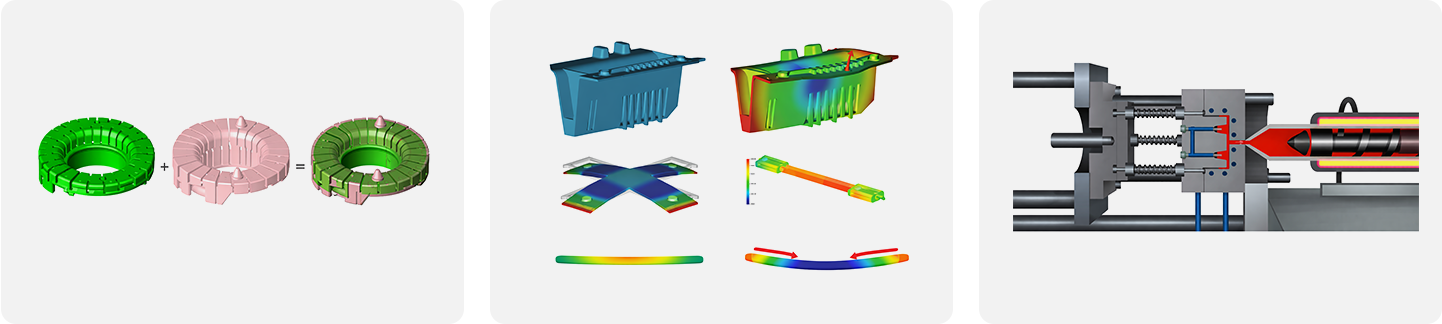
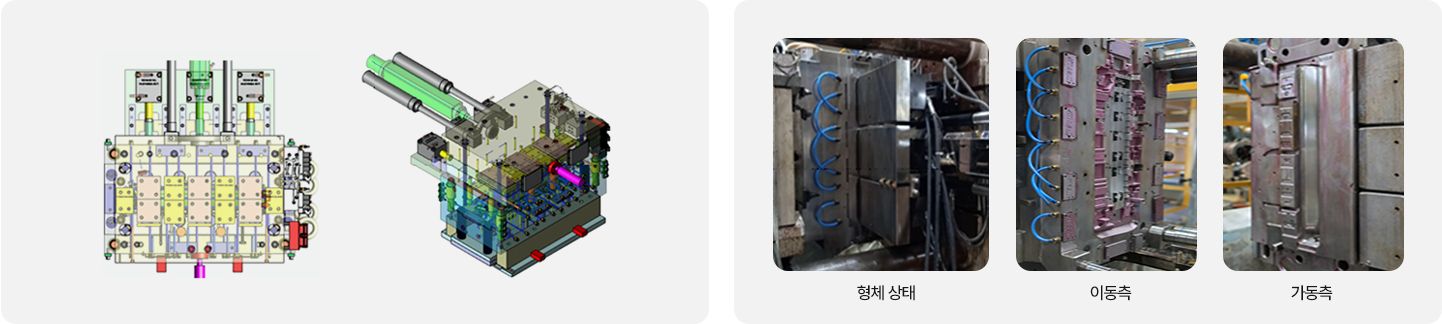
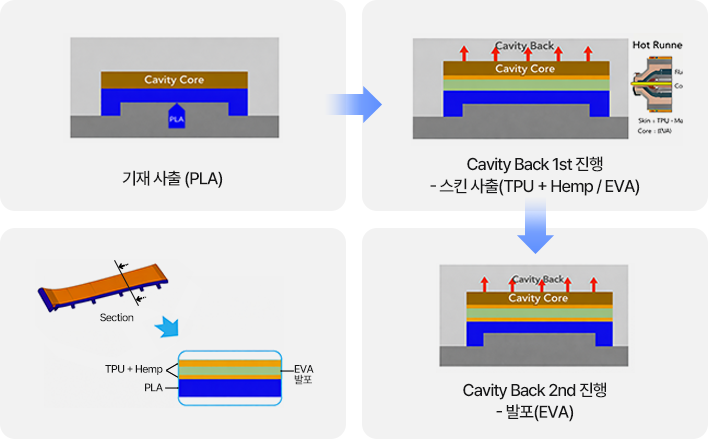
Cycle time reduction and process simplification achieved through single-mold cavity back mold design and integrated multi-layer injection molding technology.
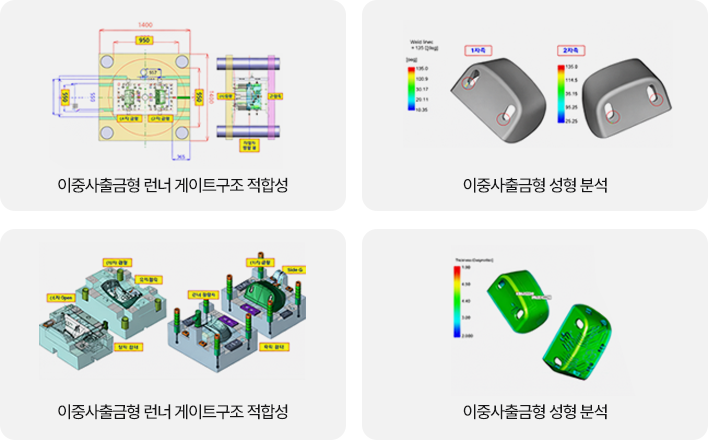
Lightweight automotive interior components and cost reduction achieved through single-mold core back mold design and integrated multi-layer injection molding technology.
Our bonding technology provides various solutions for plastic-to-rubber and metal-to-rubber bonding applications, including automotive vibration isolation components. Based on innovative process design and customized bonding solutions, we continue to lead the market while developing future technologies. Through close collaboration with customers and strong technical leadership, we deliver optimized solutions for the automotive and consumer industries while meeting diverse specification requirements.
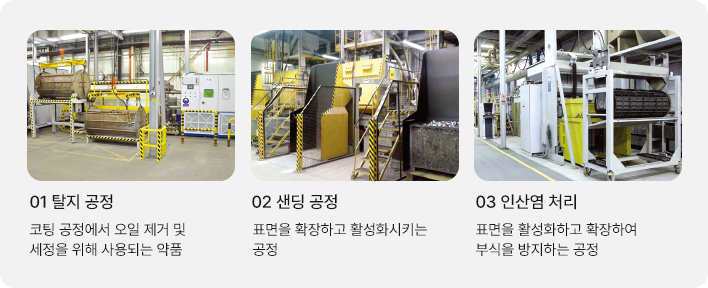
We operate advanced facilities capable of degreasing, sandblasting, and coating processes.
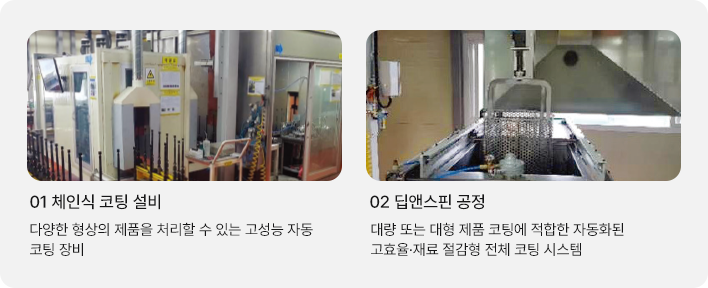
We provide precise and reliable coating solutions for steel, aluminum, plastic, cast iron, and various other components according to customer specifications. Our technologies include dipping, spraying, and masking processes, enabling selective coating applications on designated areas.
Raw material input
Degreasing 1 → Degreasing 2
Degreasing required to prevent foreign particles during shot blasting
Cleaning process may be omitted if unnecessary
Additional cleaning available upon customer request
Drying 1 → Drying 2 → Drying 3
Electric heater
Steam heater
Optional Drying 3 available
Degreasing 3
Cleaning 1 → Cleaning 2
Surface condition adjustment
Coating 1 → Coating 2
Cleaning 3 → Cleaning 4
Drying effect achieved through hot water treatment
Drying 1 → Drying 2 → Drying 3
Electric heater
Steam heater
Optional Drying 3 available
Conveyor system
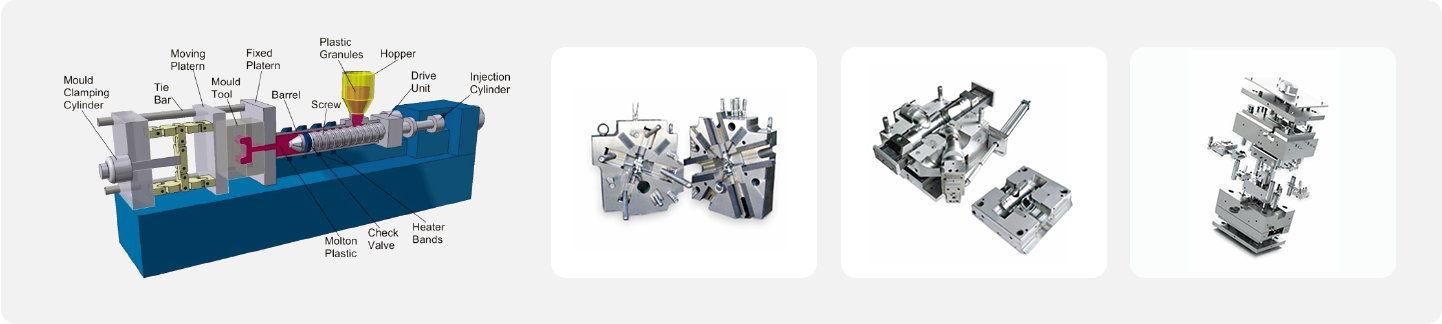
Starting as a manufacturer specializing in molds, the foundation of all industries, the company now produces and supplies injection molds for automotive interior and exterior components. Injection molding is a process in which thermoplastic resin is melted, injected into a mold, cooled, and solidified, making it suitable for manufacturing complex-shaped products.
Injection Compression Molding Applied to ultra-thin products difficult to manufacture with conventional injection molding, including light guide plates, mobile phone cases, and low-stress products.
Ultra-High-Speed Injection Molding Used for ultra-thin frames and mobile display prototype production that are difficult to achieve with conventional molding methods.
Dual Injection Molding A process using two different materials and rotating molds, applied to two-tone eyeglass frames, keypads, toys, toothbrushes, and various prototype products.
Silicone Injection Molding Utilizes thermosetting silicone materials for baby bottles, keypad covers, waterproof products, and other applications.
Plastic Injection Molding Applied to bottle caps, cosmetic containers, mobile phone cases, automotive parts, and other thermosetting plastic products.
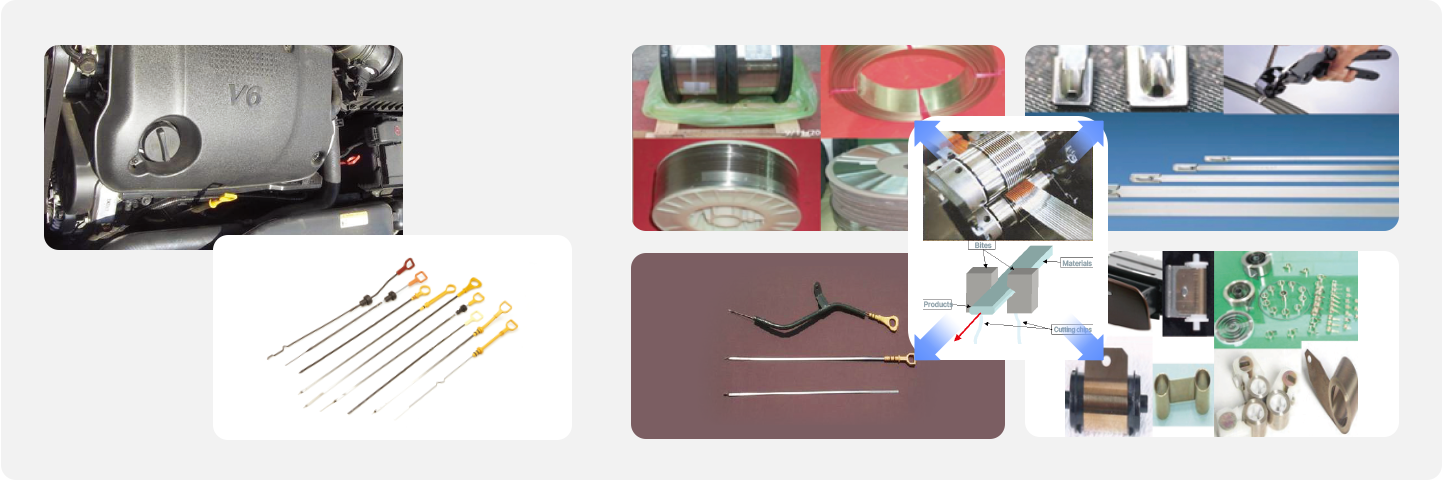
Since its establishment in 1996, the company has produced oil level gauges by combining precision metal processing technology with plastic injection molding technology based on proprietary stainless strip processing expertise. The company has acquired SQ certification in precision plastic injection molding and continues to develop strip processing technologies as a supplier to automotive manufacturers including Hyundai-Kia Motors and GM Korea.